
 By Dr. Nayanika Tummala
Recipient of the 2025 Intealth Well-being Grant Opportunity: Projects Supporting IMG Physician Wellness

I want to begin with a photograph.
It was taken one night in Yosemite: a crescent moon, the silhouettes of trees, a deep blue sky. Nothing dramatic. But when I show it to a room of residents, every single person sees something different. Some see a quiet calm. Some see loneliness. Some see that sliver of moon and feel hope. Some see the trees and think of home, wherever home is for them. I have come to believe that is the truest thing anyone can say about well-being. It is not a program or a checklist. It is personal, shaped by where you came from, what you carry, and how you happen to see the world at three in the morning when the pager goes off again.
I completed my medical degree in India and came to New Jersey to begin internal medicine residency with the kind of ambition that gets a person across an ocean. I expected the medicine to be the hard part. It wasn’t. The hard part was the silence between the shifts, the quiet of a call room far from everyone who had known me before I became a set of pager numbers. For a while I assumed that feeling was mine alone, some private failure to keep up while my peers seemed to glide through it all. It took me a few months to learn that almost everyone around me was carrying some version of that same feeling.
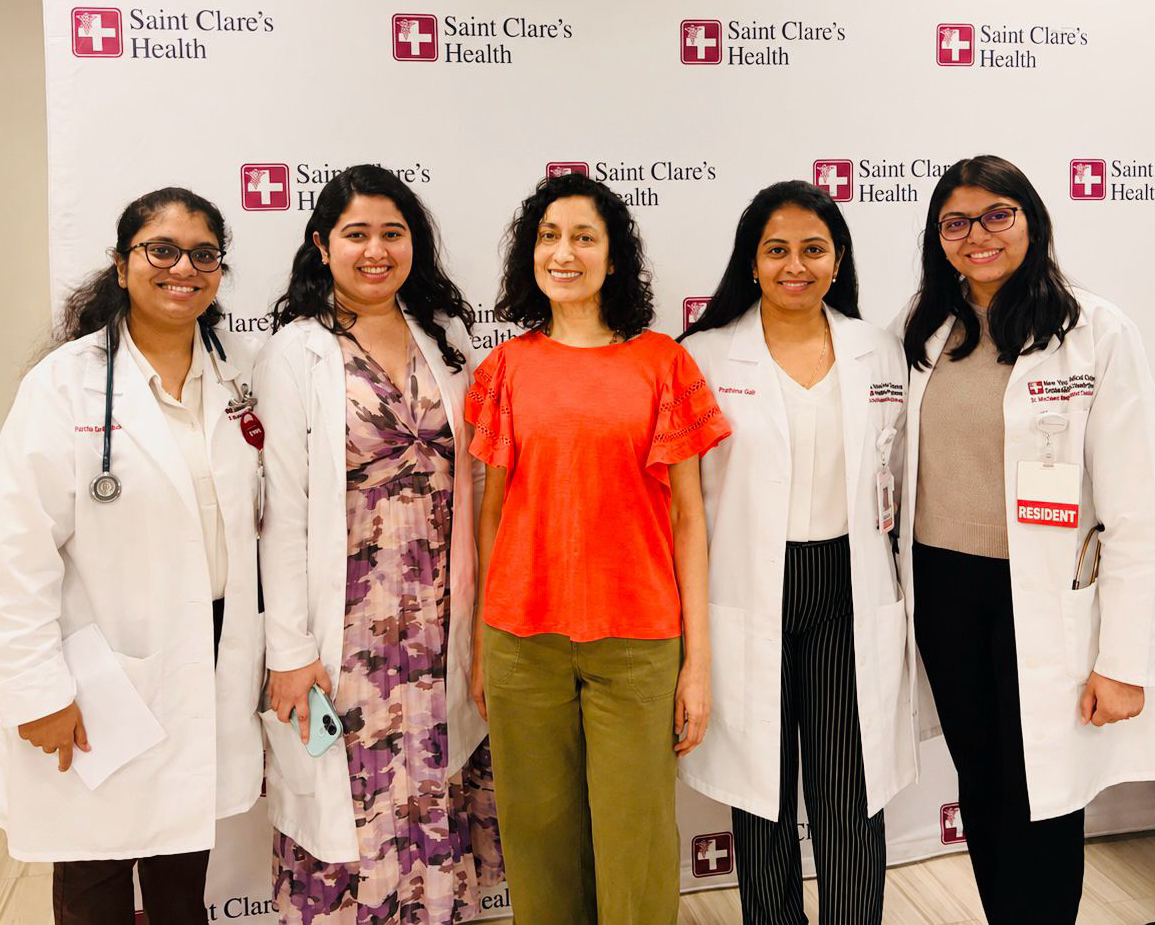
Our New York Medical College program lives across three hospitals in northern New Jersey, St. Mary’s General Hospital in Passaic and St. Clare’s Hospitals in Denville and Dover. A great many of us trained abroad before we got here. The hurdles were the same from one site to the next: learning a new health system, building an entire life from nothing, trying to find people in a place where everything that used to be simple suddenly wasn’t. We are three community hospitals doing the best we can with what we have, held together by the belief that this matters.
When I came across the Intealth Well-being Grant Opportunity, it felt almost as though someone had written it for the exact gap I had been living in: an initiative that understood how steep the transition is for J-1 physicians and was willing to put real support behind a resident’s idea to improve it. I hesitated to apply. It was a national call, and I was an intern still finding her footing. But I knew what would have helped me in those first months. Here was a chance to build it for the residents coming after me. When the email arrived saying we had been chosen, I read it twice. An idea born in a break room, with no department behind it, had been judged worth funding.
The truth is that ROOTS did not start with the grant. It started with a sticky note.
I still remember it on the break-room board. Small, hurried handwriting, no name. Five words: “Helped me decompress during rounds.” I never found out who wrote it, or what kind of shift had pulled it out of them. I only knew that someone in that building had felt a little less alone and had reached into the quiet to say so. I read it more times than I’d admit. And it told me, more plainly than any proposal could, what we were trying to make: not a policy, not a protocol, but a culture, something small and low to the ground, woven into the ordinary texture of a hospital day, that let people feel less alone inside it. We called it “ROOTS,” Reinventing Orientation and Outreach Through Storytelling, and from October 2025 through the following spring it grew, quietly, across all three of our sites, carried by a handful of resident co-leads and steadied by our faculty mentor, Dr. Venkatesh Gondhi. I was lucky, too, to have Dr. Swetha Balaji, a senior resident who encouraged me.
And not all of it was about hardship. Residency has a quiet way of taking away the creative part of you, the part that once made things just to make them. Some of what grew here was about giving that part somewhere to go. One evening it was a long table of plain canvas tote bags and open containers of paint; a room full of residents who, for a couple of hours, were artists again instead of pager numbers. Other times it was smaller: goodie bags put together by hand, little kits to care for the body that residency runs into the ground; reminders that the ordinary business of being a person still mattered. Because it does.
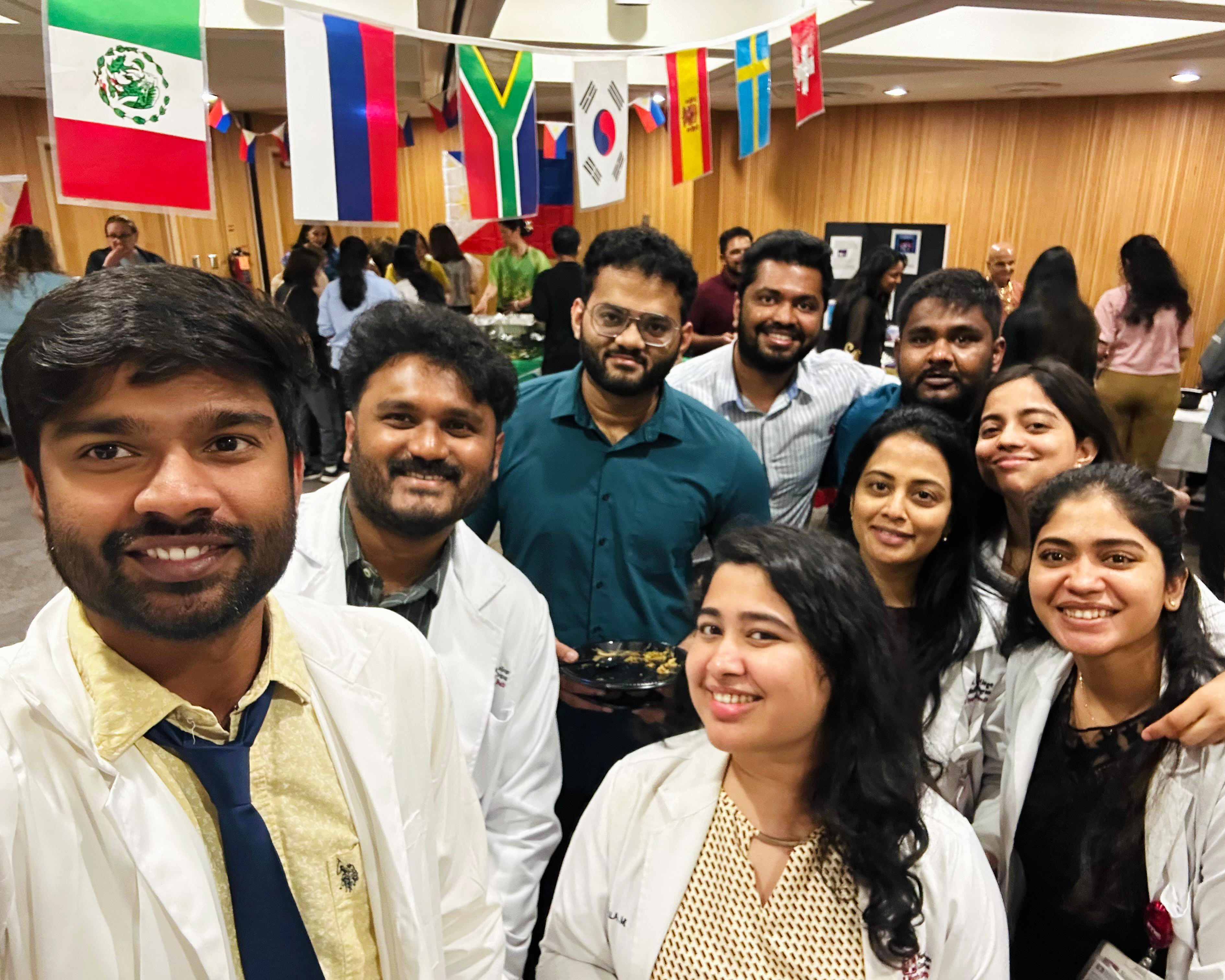
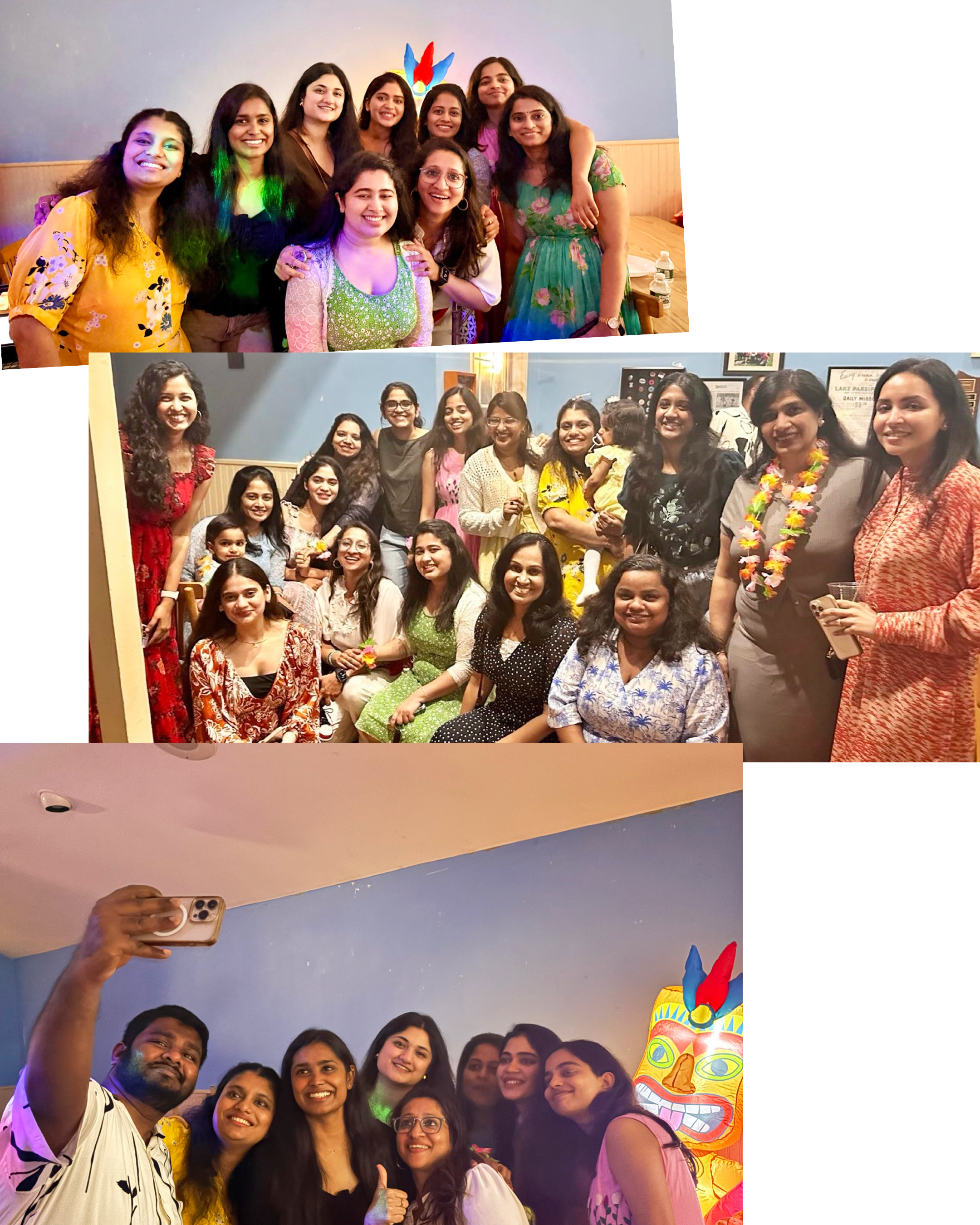
The calendar gave us the rest. There was the night a winter storm closed the roads and a shift that should have felt like a marooning turned into the opposite. Residents who couldn’t get home gathered in one warm room, snow stacking against the windows, while inside there was all the food and noise and the particular closeness of people stranded together and glad of the company. There was an hour, one ordinary afternoon, when someone led us through nothing but breathing. A room full of physicians who spend their days telling patients to slow down, finally doing it themselves. And there were the days we set the hospital’s own calendar aside to honor the ones we had carried from home: a table glowing for Diwali, an Iftar long enough for everyone to break the fast together at Ramadan, and the Christmas gathering that was really where ROOTS began. For people who had crossed oceans to be here, those evenings were never decoration. They were proof that you could be a doctor in New Jersey without leaving the rest of yourself at the door.
I won’t pretend our end-of-program survey showed that we had solved anything. Honesty serves this story better than a tidy headline. When residents across the three sites answered, their average score on the standard perceived-stress scale came back around 14.4: squarely moderate; the stress of a hard job, neither erased nor catastrophic. The burnout measure told the part I cared about more. On a five-point scale, exhaustion and disengagement sat near 2.3, which is to say our residents were tired, genuinely tired, but they had not checked out, not detached from the work and not detached from each other. That gap, between exhausted and disengaged, is the whole game. A program like ROOTS cannot lift the real weight of residency. What it can do is keep people connected while they carry it, so that exhaustion never hardens into isolation.
The numbers were never going to be the real evaluation, though. Near the end, we asked residents one question: “What does wellness mean to you?” Their answers said more than any score.
-
-
- “Wellness, to me, is more than just being physically healthy. It’s about feeling balanced in your mind, body, and everyday life. True wellness means slowing down enough to take care of yourself so you can genuinely care for your patients. So, treat yourself like the patient you’d never neglect.” — Dr. Ariadna Garcia
- “Feeling supported not just as residents, but as people outside the hospital too. I think making it more meaningful comes from simple things: protected time to recharge, mentorship, social activities, and creating a culture where residents genuinely look out for each other.” — Dr. Anas Mardini
- “Wellness, to me, means having the space to breathe, soak in the sun, and explore interests outside work.” — Dr. Praneeth Jasti
-
Not one of them mentioned a checklist; they talked about being seen and treated as whole people.
The question I keep returning to is not, “Did it work this year?” but “What happens when I’m gone?” A wellness program that lives in one person’s calendar dies the day they graduate. From early on, we built ROOTS to be handed down: co-leads spread across training years and across all three hospitals, a toolkit that lets the rituals be reproduced by people who never met me, and standing peer circles so the structure itself carries the culture forward. I wanted ROOTS to outlast its founder, and that meant designing my own absence into it from the start.
If your program is weighing something like this, the most useful thing I can tell you is to begin by listening. A short survey, or even an open board in a break room, will show you what your residents actually need, rather than what a polished wellness plan may assume. Bring current residents and your program leadership in from the very first day. Shared ownership is what makes the work both survivable and lasting. Keep your materials simple and tie them to things that already exist, like orientation. And do not underestimate the smallest gestures: a coin, a note, a meal shared in someone’s own tradition. They cost almost nothing and carry far more weight than you would think.
I am deeply grateful to Intealth for investing in the well-being of foreign national physicians, and for trusting a resident’s idea enough to fund it. That trust told me something I needed to hear: that our particular experiences as physicians trained far from here are not a footnote to overcome, but a source of insight worth building on.
I’ll end where I began, with the moon over Yosemite. We all see it differently, and that is exactly the point. Somewhere tonight there is a resident in a call room, far from home, carrying more than anyone should carry alone. And on a board in a break room there is a note someone left: something small, something true. They read it. And for a moment, they feel a little less alone.
That is wellness. That is ROOTS.
The Intealth Well-being Grant Opportunity awards grants of up to $5,000 to projects supporting the well-being of IMG physicians at their host institutions. In 2025, Intealth announced the winning projects of its third annual Well-being Grant Opportunity: Projects Supporting IMG Physician Wellness. The grants were awarded to three projects. This entry is about one of those projects. For more information on this initiative and details about this project, click here.