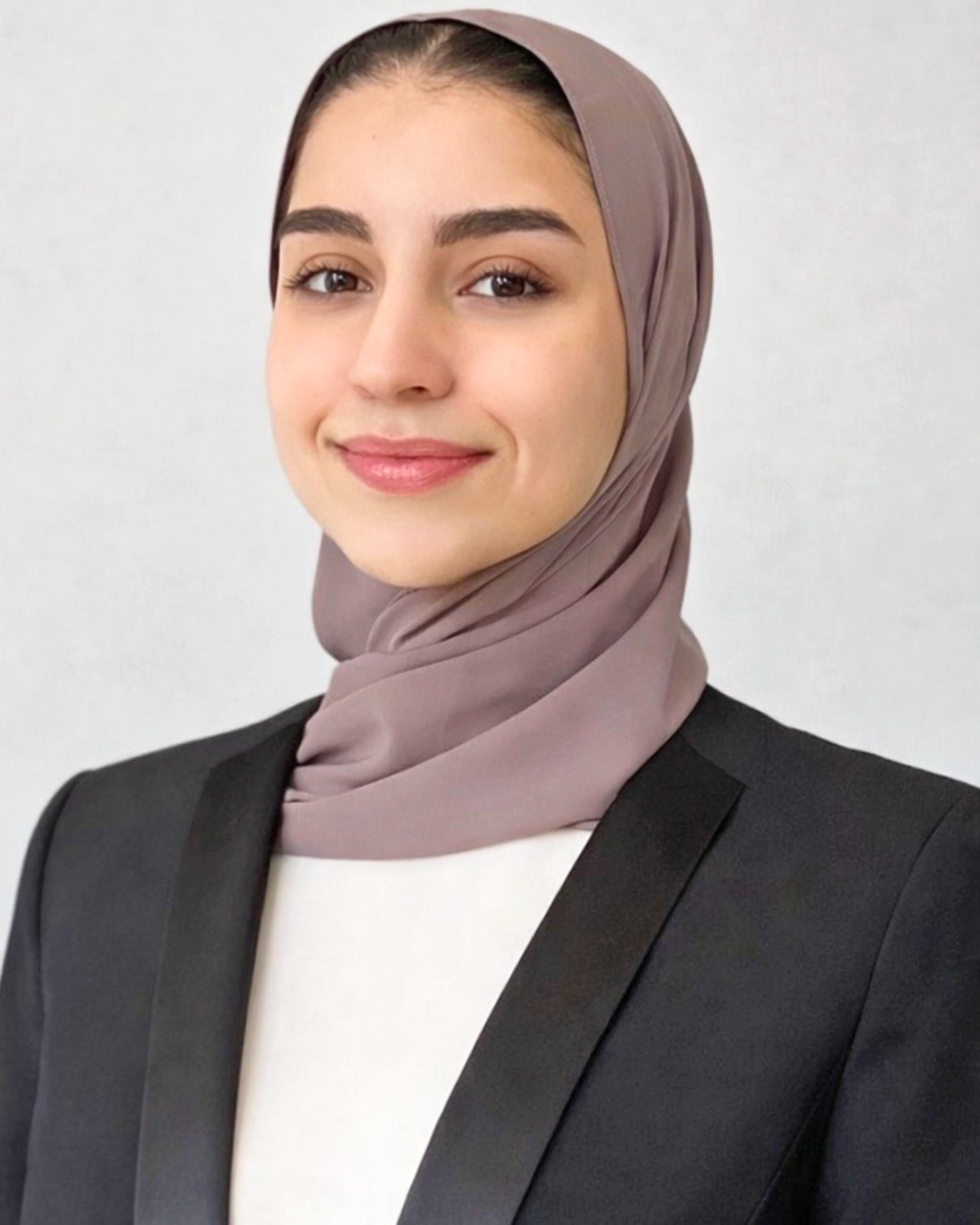
 By Dr. Youmna Faheem
Recipient of the 2025 Intealth Well-being Grant Opportunity: Projects Supporting IMG Physician Wellness
I still remember landing at JFK for the first time: contract signed, residency starting in days. No idea how to get a Social Security number or what a DS-2019 renewal even looked like. I had trained in the United Arab Emirates and matched into a pediatric residency program in the Bronx, a place as far from anything familiar as I could have imagined. I was excited. I was also, quietly, terrified.
That terror is not unique to me. It is the shared undercurrent of the experience of nearly every international medical graduate (IMG) who arrives in the United States. We come prepared for the clinical work. We are not as prepared for everything else. There is a particular kind of exhaustion that comes not from long shifts or difficult cases, but from navigating an immigration system alone, in a country you are still learning to call home, while trying to become the doctor you crossed continents to be.
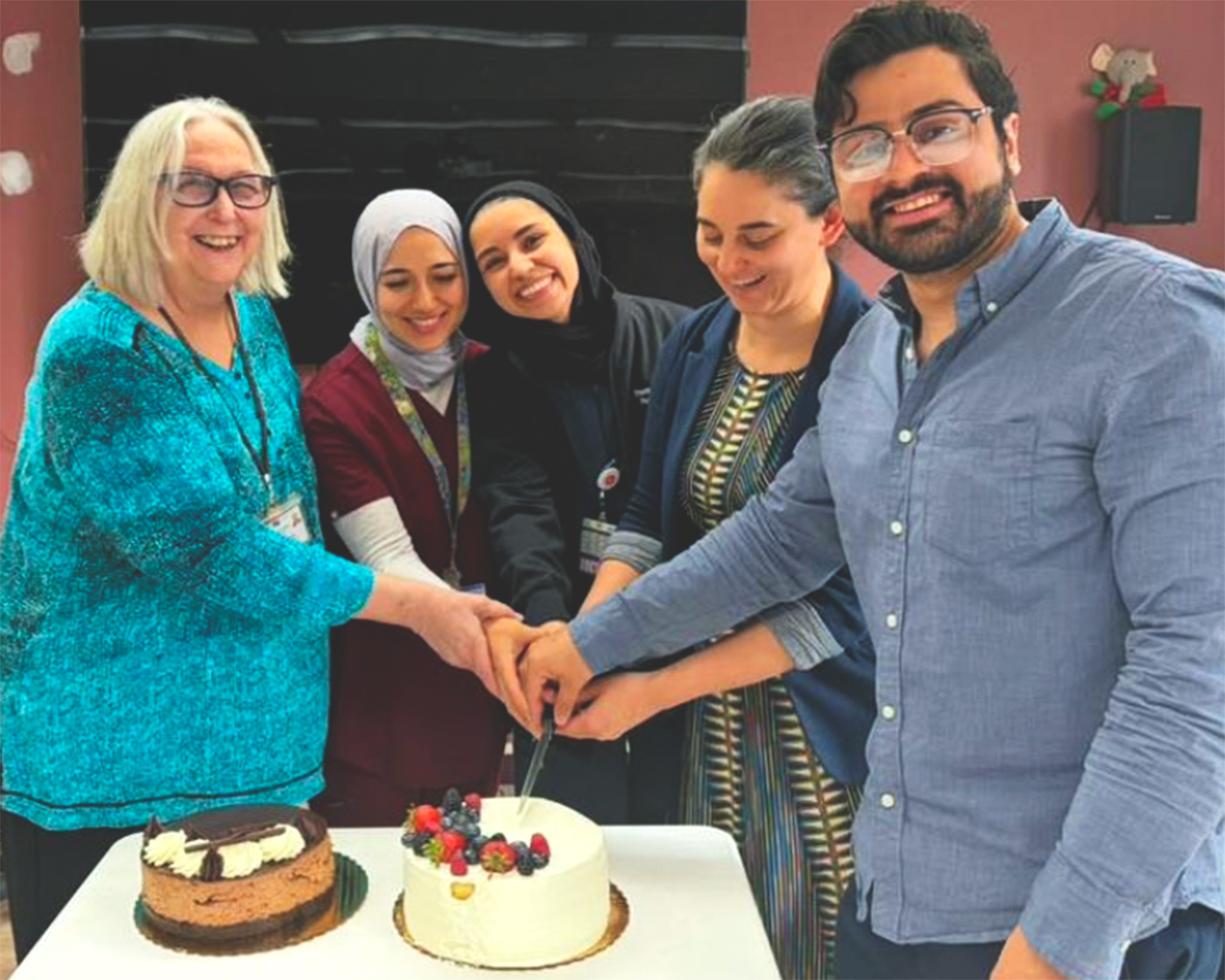
This feeling is what motivated my co-leads, Dr. Edward Lopez and Dr. Merve Aydin, and I to apply for the 2025 Intealth Well-being Grant. We wanted to build something structural; something that would still be there for the next cohort, and the one after that. When we found out our project had been selected from almost 70 proposals, we could not believe it.
At BronxCare Health System, more than one-third of our pediatric residents hold J-1 visas. When our team sat down to think seriously about what our colleagues needed, we started by listening. We conducted a formal needs assessment—surveys and open conversations with the 16 J-1 residents in our program. We found that three out of four residents had never received a formal orientation from our training program tailored to the J-1 experience. Over 80 percent reported significant financial strain from the cost of moving to and living in New York City. More than 40 percent had relocated with family and were navigating spousal employment regulations and finding childcare on top of everything else. The quantitative and qualitative data painted a picture of people trying to be excellent physicians while fighting logistical fires that had nothing to do with medicine.
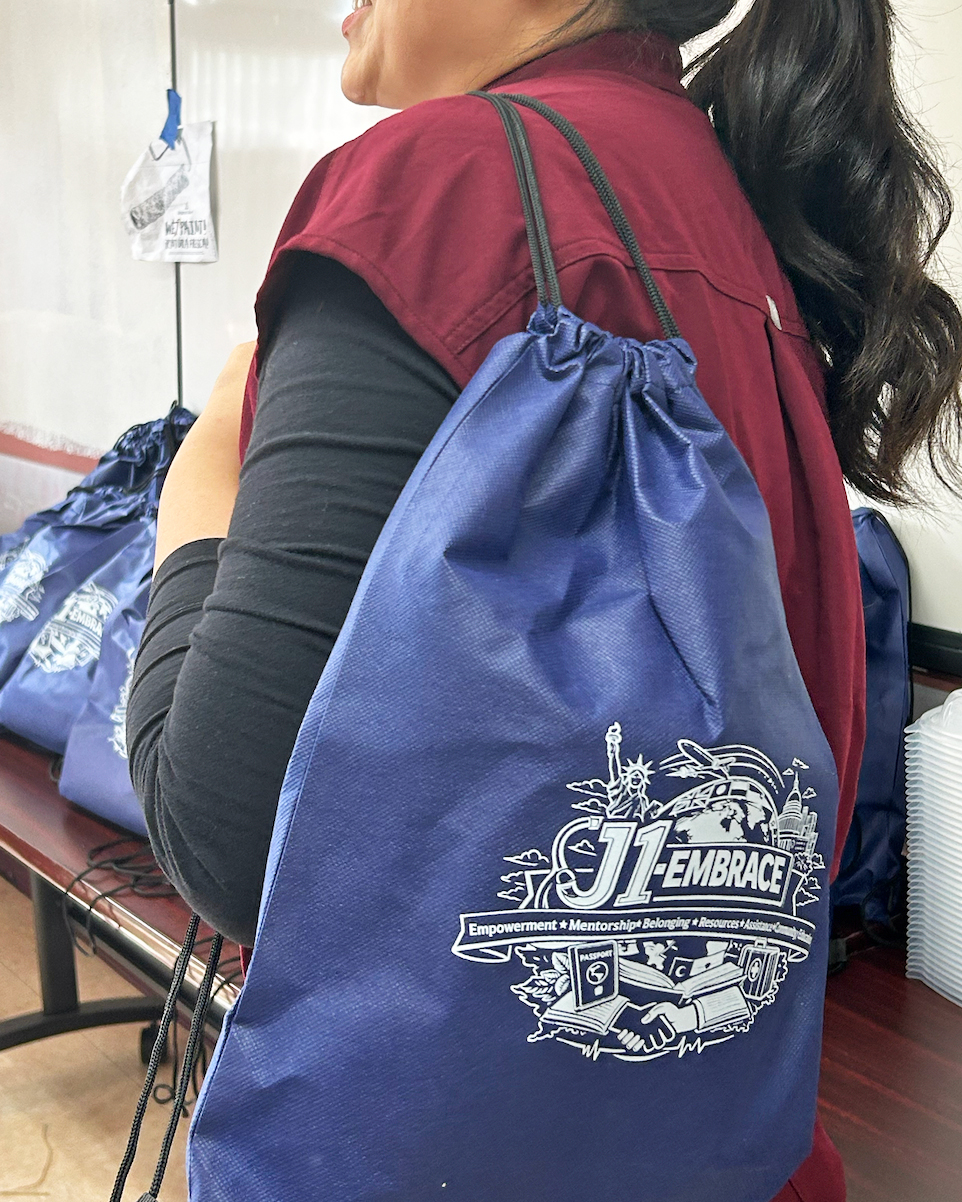
In response, we built J-1 EMBRACE: Empowerment, Mentorship, Belonging, Resources, Assistance, Community, and Education. It has three core pieces.
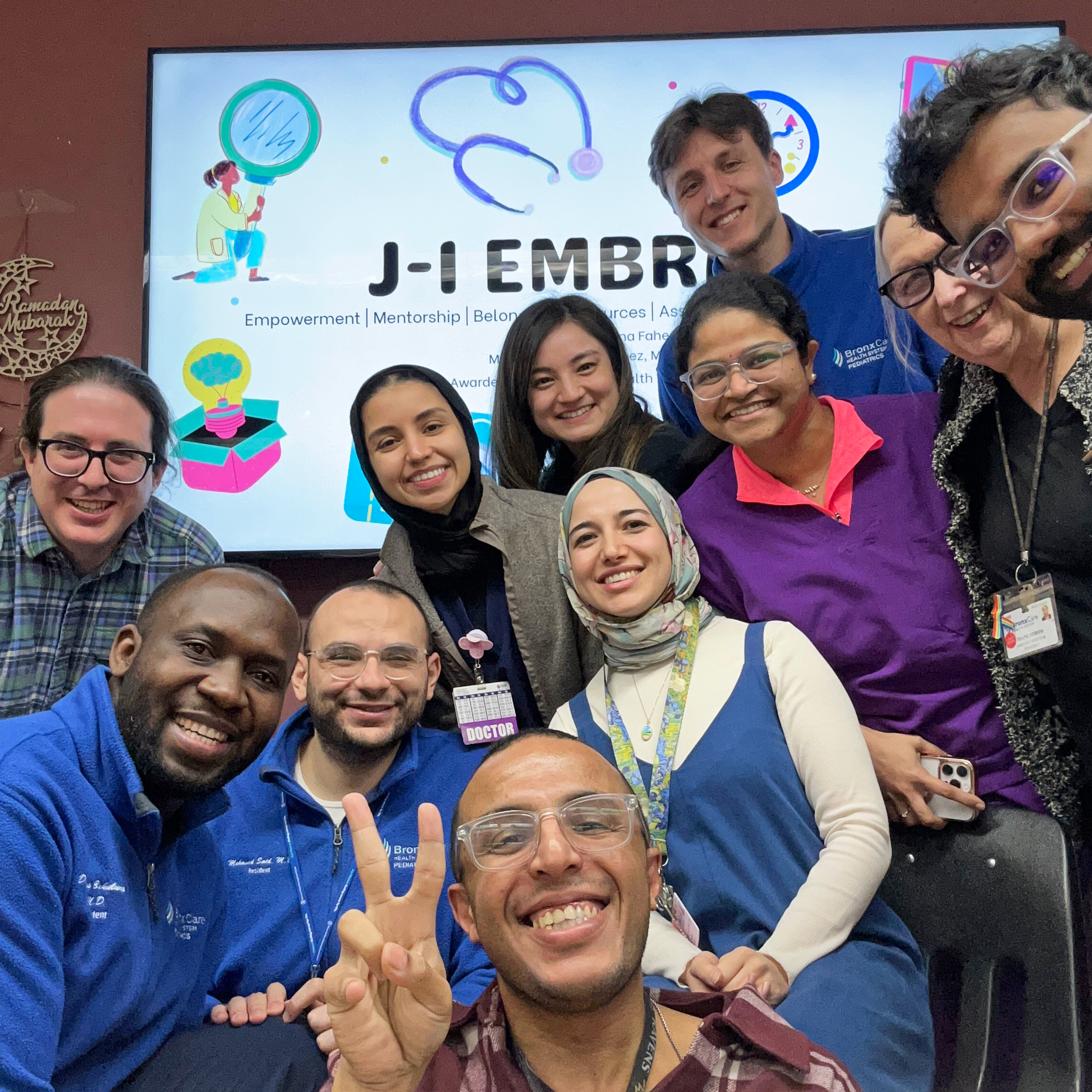
The first is the J-1 EMBRACE Toolkit, a comprehensive plain-language guide covering the practical arc of the J-1 journey: obtaining your visa, arriving in the U.S., maintaining status, annual DS-2019 renewal, navigating international travel, the J-2 dependent work authorization process, financial planning for life in New York City, and housing resources specific to the Bronx. Critically, the toolkit was reviewed by an immigration attorney and updated in January 2026 to reflect an evolving regulatory environment. We wanted residents to have a go-to reference, based on the real questions our colleagues were asking at 1 a.m. before a big travel day.
The second piece is a peer mentorship network that pairs every incoming J-1 intern with a senior J-1 resident who has lived the same experience (ideally, someone from a similar cultural background). Mentors hold check-ins throughout the year and are available through our J-1 EMBRACE WhatsApp group for questions that can’t wait for a formal meeting, as well as for general support. Having an answer to those questions from someone who has been there makes an enormous difference.
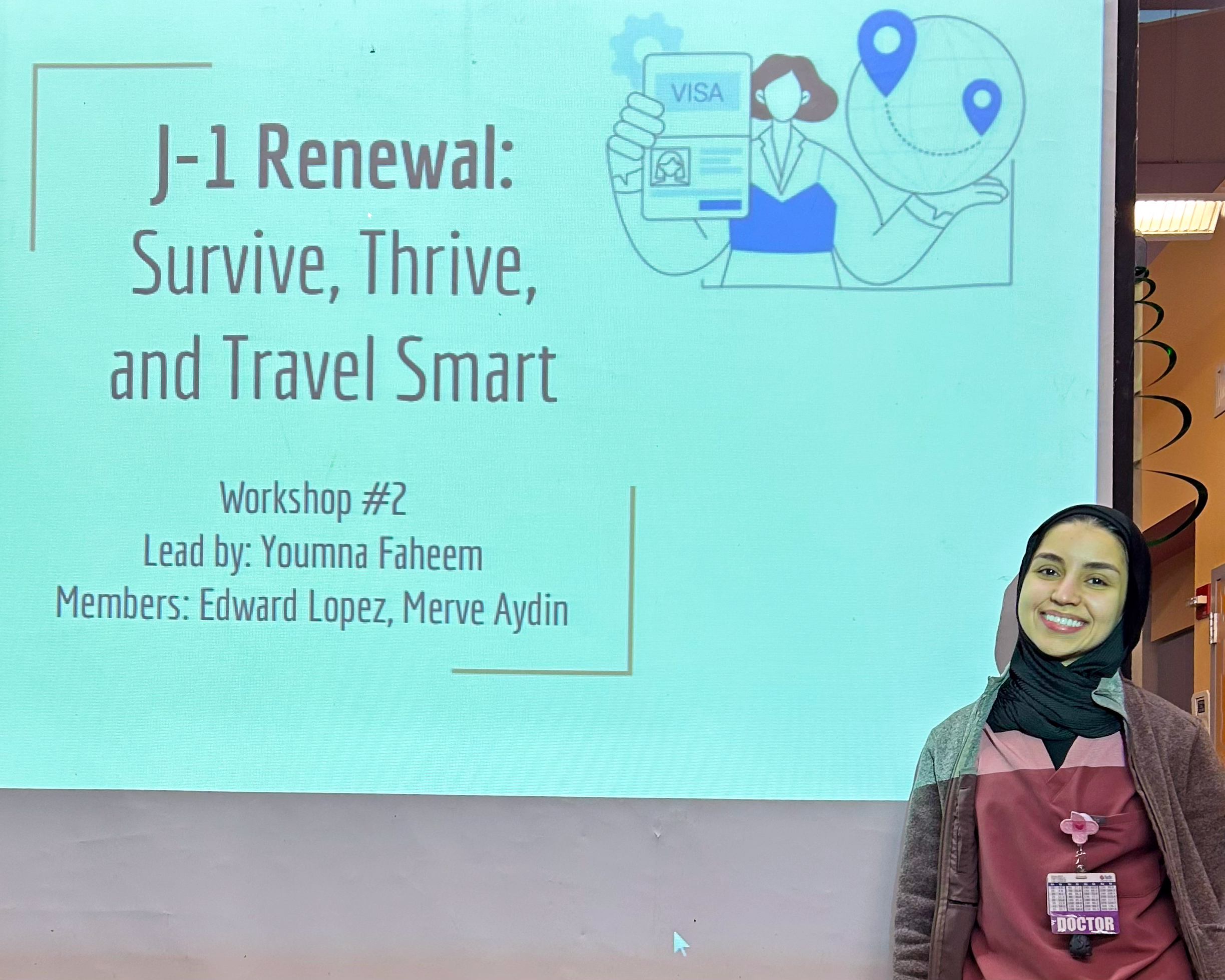
The third piece is a series of targeted workshops built around the topics our needs-assessment identified as most pressing: housing and finances, J-2 dependent work authorization, and navigating the visa process and immigration landscape. We brought in expert speakers and built in generous time for open Q&A.
Building this program taught me things I did not expect. I learned that wellness, for IMGs, is often not about mindfulness or burnout in the abstract. It is about information. It is about knowing what you are allowed to do and having someone you can call when you are not sure. The moment a resident finds a clear answer to a question about navigating life and clinical training as an IMG, a visible weight lifts.
I also learned that community is something you have to be intentional about creating. Our residents come from more than twenty countries. The isolation many feel is real, but it is also solvable with orientation dinners, mentorship matches, and a shared space where someone can ask a practical question and get a human answer within the hour. The Bronx is not an easy place to land as a newcomer, but it is full of people who have made that landing before, and who are willing to reach back and help those still finding their footing.
For any institution thinking about building something similar, I advise you to ask your J-1 residents what they need. Survey them formally and anonymously and let the data shape what you build. Involve an immigration attorney if possible, as the J-1 landscape changes quickly, and legal review adds a layer of trust to what you hand residents. Finally, design for sustainability from the very beginning. We intentionally aimed to integrate J1-EMBRACE into BronxCare’s existing residency wellness curriculum so it would outlive our graduation. The toolkit is built for annual review and update. The mentorship structure passes to the next cohort each year.
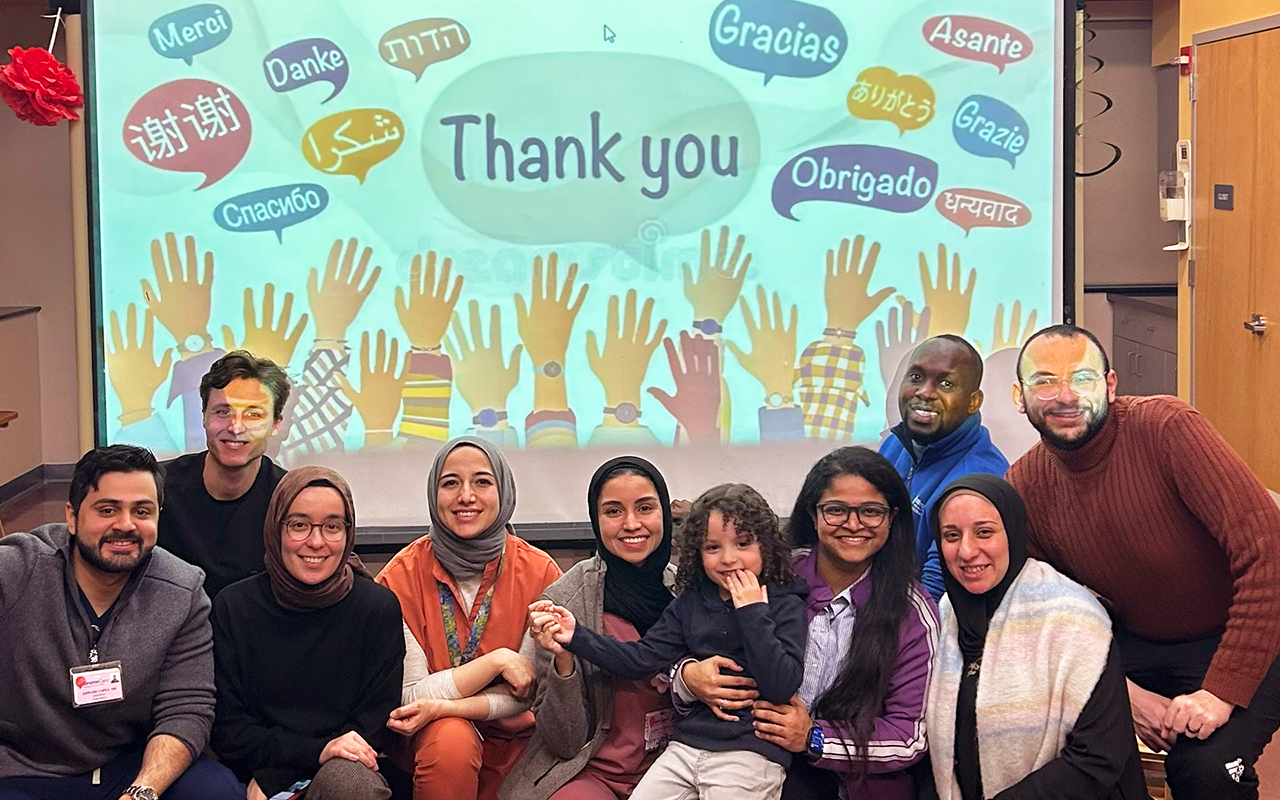
Perhaps most importantly: use your program’s own IMGs as a resource for each other. At BronxCare, we have residents from Honduras, Turkey, Egypt, Nepal, Pakistan, and dozens of other countries. Matching mentors and mentees across shared backgrounds turns a structural program into a genuine community. The data matters, but it is the relationships that make people thrive.
Dr. Lopez and Dr. Aydin have been extraordinary partners on this project in every sense. Dr. Molly Broder, our program director and mentor, believed in this from the very first conversation. And Ms. Diane Strom, providing grant and community engagement expertise, was our glue throughout the process, keeping everything together. The residents who came through J1-EMBRACE this year navigated the demands of residency alongside the added complexity of being a visa holder, and kept going. They are still here, taking care of patients in the Bronx. That is what the program is for.
The J-1 journey is hard. It is hard in ways that are often invisible to people who have not lived it. But it can be much easier with a map designed specifically for that journey. We built one at BronxCare. We hope it is used, and then made better for whoever comes next.
The Intealth Well-being Grant Opportunity awards grants of up to $5,000 to projects supporting the well-being of IMG physicians at their host institutions. In 2025, Intealth announced the winning projects of its third annual Well-being Grant Opportunity: Projects Supporting IMG Physician Wellness. The grants were awarded to three projects. This entry is about one of those projects. For more information on this initiative and details about this project, click here.